
The Power of Local
In an age of globalization, regional universities have an unexpected advantage
By Anne Prisco, Ph.D., Holy Family University president
 A FEW YEARS AGO leaders at the Children’s Hospital of Philadelphia and Jefferson Health identified an urgent challenge facing hospitals and long-term care facilities nationwide: a growing shortage of certified nursing assistants, or CNAs.
These essential caregivers monitor vital signs and support patients in their most vulnerable moments, often serving as the primary point of contact throughout a patient’s care. Yet the pipeline of trained CNAs was lagging far behind demand. In Pennsylvania alone, a survey by leading healthcare associations found a 17% vacancy rate among nursing support staff, leaving critical gaps in care across the commonwealth.
Those local healthcare leaders brought Holy Family into the conversation. Several were graduates of the school. They knew our mission, our programs, and our commitment to preparing students for service in their communities. They asked a simple question: Can you help?
Within months, Holy Family’s faculty and administrators were exploring solutions. The dean and vice dean of the School of Nursing & Health Sciences completed a “train-the-trainer” program to understand exactly what CNA preparation required. They developed a curriculum, secured state approval, and in about a year, by fall 2024, a simple conversation had turned into a real solution.

This is what it looks like when a university is deeply connected to its region. The ability to respond quickly didn’t come from a new initiative or a major grant. It came from listening, consistently and closely, to the needs of the community. At a moment when higher education is being asked to prove its value, that kind of responsiveness matters. It also points to something larger: Regional universities are uniquely positioned to meet both the current challenges facing higher education and the economic needs of the communities they serve.
HIGHER EDUCATION today is under intense scrutiny. Public confidence in colleges and universities has eroded in recent years across political and economic lines. Today, 70% of Americans say that higher education is headed in the wrong direction, according to a 2025 Pew Research Center survey. Families are considering not just tuition costs but the debt students may carry after graduation and whether a degree will lead to stable, well-paying employment. Employers, for their part, are looking for graduates with relevant skills who can contribute on day one.
The message is clear: Higher education can no longer assume its value—it has to prove it. Regional universities are responding to that pressure in a fundamentally different way from either large national universities or small liberal arts colleges.
For much of higher education’s history, the phrase “town and gown” captured a divide between universities and the communities around them. But for many regional institutions like Holy Family, that separation has never fully existed. Our students are overwhelmingly local. They commute from nearby neighborhoods, balance coursework with jobs and family responsibilities, and often remain in the region after they graduate. That proximity creates something powerful: a continuous exchange between education and the workforce.
At Holy Family, when local healthcare systems face staffing shortages, we hear about it quickly. When school districts need teachers or regional businesses need employees with specific technical skills, those conversations often begin through existing relationships— with alumni, local leaders, and community partners who see the University not as a separate entity but as part of a shared ecosystem.
The CNA program is one example of this model in action. The University has long had a robust healthcare education program, graduating more than 350 highly qualified nurses each year, so it was natural to respond to this new gap in the medical workforce with multiple training pathways, including a yearlong program offered through a partnership with St. Hubert Catholic High School, a 15-week program, and an accelerated course. Students can move efficiently from training into certification and directly into jobs where they are urgently needed.
And the same pattern appears across disciplines. Regional growth in the life sciences sector has led to expanded programs in biotechnology and advanced health professions at Holy Family. The rise in digital threats has driven the development of cybersecurity offerings. Conversations with labor organizations are shaping potential new business programs designed to help skilled tradespeople build and manage their own companies. Emerging needs in emergency response are guiding the development of new training programs in that field as well.
These efforts share a common principle: They are built in response to real, identified needs, not assumptions about what students or employers might want, but direct input from the communities we serve.
That kind of alignment benefits everyone. Students gain access to clear pathways into meaningful careers. Employers build reliable pipelines of talent. And regions strengthen their economic resilience by developing the workforce they need from within.
THIS MODEL WORKS in one place, so what could it look like at scale?
What would happen if communities across the country treated regional universities as essential partners in economic development? What if, instead of viewing them primarily as educational institutions, we recognized them as engines of workforce growth, social mobility, and regional stability?
The implications are significant.
Policymakers could prioritize investment in programs that are directly tied to local workforce needs, supporting universities that demonstrate strong partnerships with employers and clear outcomes for students. Employers could play a more active role in shaping curricula, creating training pipelines, and investing in the institutions that prepare their future workforce. And colleges and universities could build more agile systems, shortening the distance between identifying a need and launching a program designed to meet it.
Many regional universities are already doing this work. But with greater alignment and support, they could do far more. They could expand access to affordable, flexible education for students whose lives don’t fit a traditional residential model. They could respond more rapidly to shifts in industry and technology. And they could help anchor opportunity in communities that might otherwise be left behind in broader economic change.
At a time when higher education is being asked to demonstrate its relevance, regional institutions offer a clear and compelling answer. Their strength lies not in competing on a national or global stage but in being deeply rooted in the places they serve.
Being local is not a limitation—it’s leverage. If we take that idea seriously, the future of higher education will be measured not by size or recognition but by the strength of its local impact and the vitality of the communities it serves.
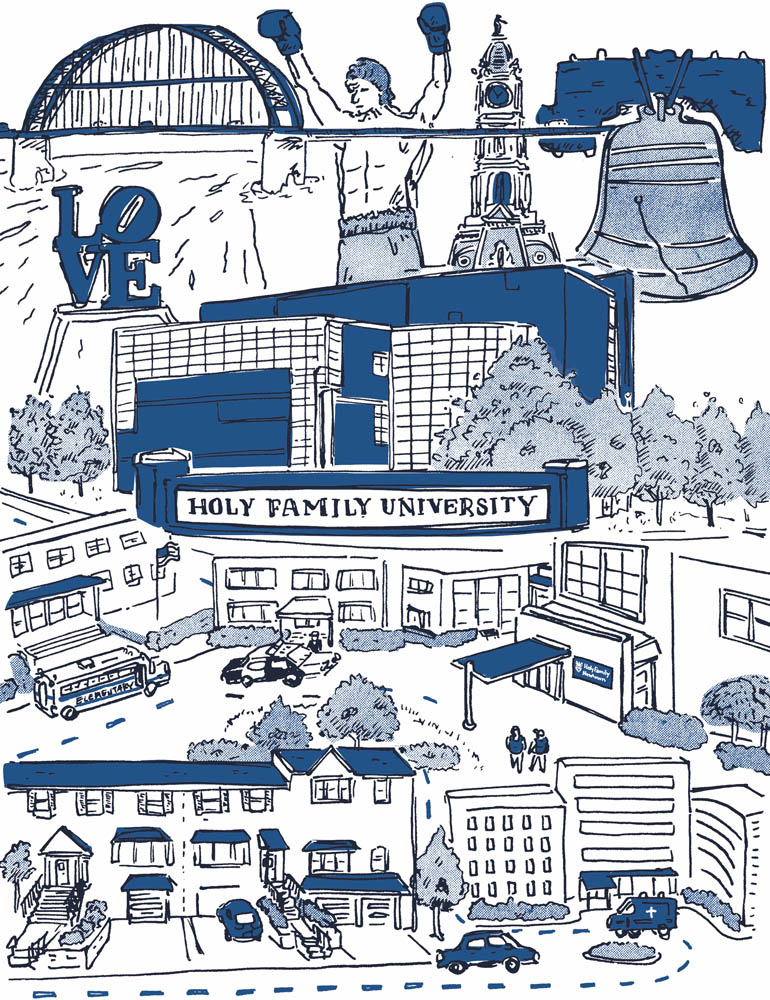
Illustration by Sean Rynkewicz