
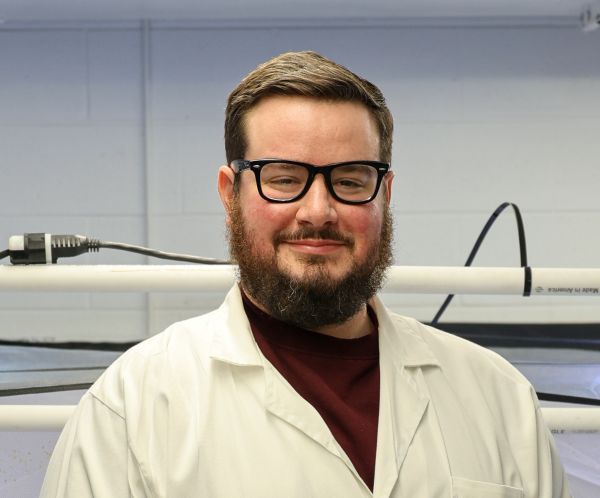
Edward A. Waddell
Education
- Ph.D., Biological Sciences, Drexel University
- MS, Teaching, Learning, and Curriculum, Drexel University
- BS, Biological Sciences, Drexel University
- AS, Liberal Arts and Sciences, Camden County College
Dr. Edward A. Waddell earned his Ph.D. in Biological Sciences and his M.S. in Education from Drexel University, focusing on neurodevelopmental biology and STEM undergraduate education. His academic interests also involve insect welfare, insect physiology, bioethics, and citizen science community outreach. In his free time, Dr. Waddell enjoys reading comic books, cooking, browsing bookstores with his wife, and spending time with his three daughters.
Research Interests
Dr. Waddell is a developmental neurobiologist and insect physiologist studying welfare concerns of farmed insects. His current scholarship centers around understanding the dietary preferences and behaviors of the Black Soldier Fly (Hermetia illucens). It is the goal of his laboratory to gain insights into the basic biology of the Black Soldier Fly to promote the welfare of these animals, and invertebrates more generally, within the global insect farming industry.
Courses Taught
- BIOL 108: Freshman Biology Seminar
- BIOL 115: Introduction to Neuroscience
- BIOL 120: Biology Principles I
- BIOL 207: Anatomy and Physiology I
- BIOL 208: Anatomy and Physiology II
- BIOL 304: Principles of Genetics
- BIOL 307: Medical Terminology
- BIOL 334: Applied Neurodevelopmental Biology
- BIOL 360: Internship I
- BIOL 361: Internship II
- BIOL 414: Scientific Communication
- BIOL 427: Research Internship I
- BIOL 428: Research Internship II
Teaching Philosophy
Dr. Waddell's teaching philosophy is structured around three facets of student-centered learning.
First, it is his goal in all of his courses and interactions with students to promote science identity. Science identity is a measure of how someone views themselves within the scientific fields, ranging from academic fields like basic biology to clinical fields like nursing. Improving science identity has been shown in the literature to be vital for improving student success and retention within the sciences. As a first-generation student, Dr. Waddell truly believe that science identity drives success in biology, and learning-centered teaching strategies along with a sincere dedication to mentorship effectively fosters it.
In line with promoting science identity, Dr. Waddell also utilizes discipline-based active learning teaching strategies in his classroom to help improve the learning outcomes of students. By placing a high value on content application and analysis, it is his goal to build critical thinking and STEM literacy skills in his students that will serve them beyond the classroom into their future careers. Additionally, by encouraging his students to intrinsically reflect on their own process of learning, it is his hope to foster an environment that will allow the students to leave the classroom a stronger and more confident learner than when they entered.
Third and finally, Dr. Waddell truly views and employs assessment as a tool for learning. Assessment often has harsh or stressful connotations associated with it, but it is his belief that almost all assessment should be used as a formative tool for learning. By designing assessments to engage students while having them use critical thinking skills, it is his goal to provide the opportunity for students to challenge themselves while scaffolding new content knowledge with their own existing knowledge base. Only through applying the new content material and addressing misunderstandings can students truly hope to build a stronger understanding of the sciences.
Student Mentoring & Opportunities
The Waddell Laboratory is excited to offer volunteer opportunities to current Holy Family University undergraduate students. Interested students are encouraged to inquire directly to Dr. Waddell.