

One Interconnected Community
Holy Family University seeks direction and inspiration from the life and teaching of Jesus Christ.
As an expression of our Catholic identity, we also recognize and value the moral and cultural truths expressed by the world’s religions and celebrate the diverse spiritual journeys of our students, faculty, and staff.
In a display in the University’s Campus Center, the risen Jesus, the ultimate symbol of Christian hope and unconditional love, is surrounded here by the symbols of other religions, reminding us that we are one interconnected community bound by a commitment to human dignity and solidarity.
The religions recognized in this display include:
Judaism
 In Judaism, the interlocking triangles of the Star of David—or Magen David—symbolize the sacred connection between God and humanity.
Judaism is the foundational Abrahamic monotheistic religion, integrating spiritual, cultural, and legal practices rooted in sacred texts and traditions. By observing the law revealed to Moses by God, adherents honor a covenant with God to lead moral lives. This rich heritage emphasizes communal responsibility and ethical action (mitzvot) to bring healing to the world (tikkun olam).
Islam
 Islam’s star and crescent represent divine guidance and the lunar calendar.
Islam is an Abrahamic monotheistic religion where Muslims submit (from the Arabic root S-L-M) to God’s will. Based on the Holy Qur’an and the Prophet Muhammad’s teachings, it centers on five pillars: the creed (Shahada), prayer (Salah), charity (Zakat), fasting during Ramadan (Sawm), and pilgrimage to Mecca (Hajj), fostering a life of devotion, justice, and spiritual peace.
Hinduism
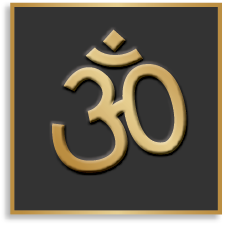 In Hinduism, the sacred symbol Om represents the sound of the universe.
Hinduism encompasses a variety of Indian religious and spiritual traditions. Its core beliefs include the origin and cause of all things (Brahman), actions and their consequences (karma), the cycle of death and rebirth (saṃsāra), liberation from passions (moksha), and the proper goals for human life (Puruṣārthas).
Buddhism
 The Dharma wheel represents the Noble Eightfold Path of Buddhism.
Founded by Siddhartha Gautama, Buddhism seeks liberation from suffering (dukkha) by understanding and practicing the Four Noble Truths: the acceptance that suffering is a part of life (duḥkha), the cause of suffering (samudaya), the cessation of suffering (nirodha), and the path to end suffering (marga). Guided by Dharma and the Eightfold Path, practitioners navigate the cycle of samsara (rebirth). By cultivating wisdom and ethics, they aim for nirvana, ultimate release, or the spiritual liberation of all sentient beings.
Orthodox Christianity
 The three-bar cross of Orthodox Christianity represents the crucifixion of Christ: the sign above Jesus’ head, Christ's nailed hands, and a slanted footrest representing two thieves.
Distinct from Western traditions like Roman Catholicism and Protestantism, Orthodox Christianity emphasizes mysticism and sacred icons. While adhering to core Christian doctrines, it focuses on theosis: the transformative process of becoming more like God, aiming to surpass the spiritual state held by Adam and Eve at creation.
Sikhism
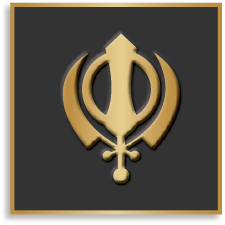 The three parts of Sikhism’s Khanda represent a sword of truth, an eternal circle, and twin swords balancing spiritual and temporal power.
Sikhism, founded by Guru Nanak in 15th-century Punjab, India, emphasizes devotion to Ik Onkar, the one supreme reality. It promotes human oneness, selfless service, social justice, and honest conduct. Guided by the Guru Granth Sahib (the Sikh scriptures), Sikhs champion equality and reject discrimination, seeking spiritual liberation through meditation and devotion to the one creator.
Taoism
 The yin-yang or Taoism illustrates harmonious duality balancing opposing forces and the eternal cycle of light and darkness.
Taoism is an ancient Chinese philosophy and religion centered on the Tao, the ultimate, nameless, and formless source of all existence. It advocates for Wu Wei (effortless action), simplicity, living in harmony with nature, and the worship of ancestors. By balancing yin and yang, Taoists seek spontaneous harmony, spiritual unity, and inner peace.
Baháʼí Faith
 In the Baháʼí Faith, the nine-pointed star represents unity, ultimate perfection, and the numerical value of the word “Baha.”
Founded in 19th-century Persia (modern-day Iran) by Bahāʾu’llāh, the Bahāʾī Faith emphasizes the unity of God, humanity, and all major religions. It teaches that divine messengers (including Buddha, Jesus, and Muhammad) have progressively educated humanity. Led by the elected Universal House of Justice, the faith champions a unified world order, social justice, and service to the poor.